


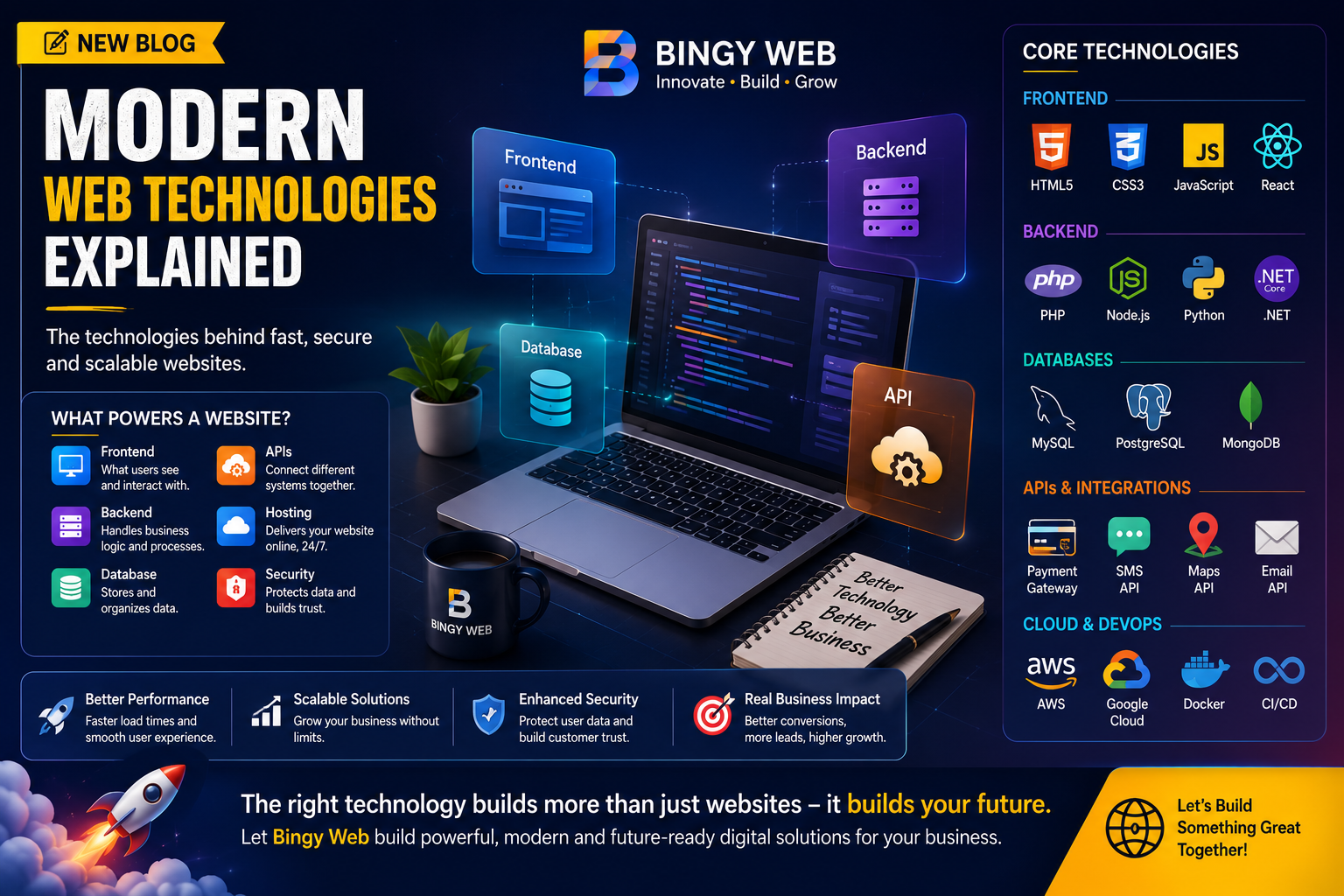
Modern Web Technologies Explained: Frontend, Backend, Databases, APIs, and Their Real-World Uses
Introduction: Technology Is the Foundation of Every Modern Website
When people visit a website, they often focus on its design, content, and functionality. What many don’t realize is that behind every successful website lies a powerful combination of technologies working together to deliver a seamless experience.
From a simple business website to a complex e-commerce platform, educational portal, healthcare system, or SaaS application, modern web technologies play a crucial role in ensuring speed, security, scalability, and performance.
As businesses continue their digital transformation journey, understanding the technologies behind websites can help owners make informed decisions about their investments. While business owners don’t need to become developers, having a basic understanding of modern web technologies can help them choose the right solutions for growth and long-term success.
In this guide, we’ll explore the key technologies that power today’s websites and web applications, including frontend development, backend systems, databases, APIs, cloud infrastructure, security technologies, and their real-world business applications.
Understanding the Architecture of Modern Websites
A modern website is much more than a collection of pages.
Think of it like a restaurant:
- The dining area represents the frontend.
- The kitchen represents the backend.
- The storage room represents the database.
- The waiters represent APIs that carry information.
- The building infrastructure represents hosting and cloud services.
All these components work together to create a smooth customer experience.
Modern websites generally consist of:
- Frontend Technologies
- Backend Technologies
- Databases
- APIs
- Hosting Infrastructure
- Security Systems
Each layer serves a unique purpose and contributes to the overall functionality of the website.
What Is Frontend Development?
Frontend development refers to everything users see and interact with on a website.
It focuses on:
- Layouts
- Colors
- Navigation
- Animations
- Forms
- Buttons
- Responsive Design
The frontend is responsible for creating a positive user experience.
Core Frontend Technologies
HTML (HyperText Markup Language)
HTML is the foundation of every website.
It structures content such as:
- Headings
- Paragraphs
- Images
- Videos
- Forms
- Navigation menus
Without HTML, web pages would not exist.
Business Usage
Every website, regardless of size or industry, relies on HTML to organize and display information effectively.
CSS (Cascading Style Sheets)
CSS controls the appearance of websites.
It manages:
- Colors
- Typography
- Layouts
- Spacing
- Animations
- Responsive design
Business Usage
CSS helps businesses create professional, visually appealing websites that strengthen brand identity and improve customer engagement.
JavaScript
JavaScript adds interactivity and dynamic functionality to websites.
Examples include:
- Interactive forms
- Image sliders
- Pop-up windows
- Real-time updates
- Dynamic content loading
Business Usage
JavaScript enhances user experiences and allows businesses to create more engaging websites.
Popular Frontend Frameworks
Modern developers often use frameworks to accelerate development and improve performance.
React
React is one of the most popular frontend libraries.
Developed by:
Meta Platforms
Benefits
- Fast performance
- Component-based architecture
- Scalable development
- Interactive user interfaces
Common Uses
- Business dashboards
- SaaS applications
- E-commerce platforms
- Customer portals
Angular
Angular is a powerful frontend framework.
Developed by:
Benefits
- Enterprise-level scalability
- Structured architecture
- Strong security features
Common Uses
- Banking systems
- Healthcare portals
- Enterprise applications
Vue.js
Vue is known for simplicity and flexibility.
Benefits
- Easy integration
- Fast development
- Lightweight architecture
Common Uses
- Startups
- Business websites
- Custom web applications
What Is Backend Development?
While frontend development focuses on what users see, backend development handles everything happening behind the scenes.
The backend manages:
- Business logic
- User authentication
- Data processing
- Database interactions
- Security controls
Without backend technologies, websites would simply display static content.
Popular Backend Technologies
PHP
PHP remains one of the most widely used web development languages.
Benefits
- Reliable
- Cost-effective
- Large community support
Common Uses
- WordPress websites
- Corporate websites
- E-commerce stores
Many successful business websites continue to use PHP because of its stability and flexibility.
Node.js
Node.js allows developers to use JavaScript on the server side.
Benefits
- High performance
- Real-time processing
- Efficient scalability
Common Uses
- Chat applications
- Live dashboards
- Streaming platforms
- SaaS applications
Python
Python has become increasingly popular for modern web development.
Benefits
- Clean syntax
- Fast development
- AI integration capabilities
Common Uses
- AI-powered platforms
- Data analytics systems
- Healthcare applications
- Educational platforms
As artificial intelligence continues to expand, Python’s importance in web development is growing rapidly.
Understanding Databases
Websites often need to store information.
Examples include:
- Customer details
- Product catalogs
- Orders
- Student records
- Patient information
- User accounts
Databases make this possible.
MySQL
MySQL is one of the world’s most popular relational databases.
Benefits
- Reliable
- Secure
- High performance
Common Uses
- Business websites
- E-commerce platforms
- Content management systems
PostgreSQL
PostgreSQL is known for advanced data management capabilities.
Benefits
- Scalability
- Data integrity
- Advanced querying
Common Uses
- Enterprise systems
- Financial applications
- Healthcare platforms
MongoDB
MongoDB is a NoSQL database.
Instead of traditional tables, it stores flexible document-based data.
Benefits
- Flexible structure
- Easy scalability
- Fast performance
Common Uses
- SaaS applications
- Real-time systems
- Large-scale platforms
What Are APIs?
API stands for Application Programming Interface.
Think of APIs as messengers that allow different software systems to communicate with each other.
For example:
- A payment gateway communicates with your website.
- A shipping provider updates delivery information.
- Social media platforms connect with websites.
- Google Maps displays locations.
All of these interactions happen through APIs.
Real-World API Integrations
Payment Gateways
Allow customers to make secure online payments.
Examples include:
- Razorpay
- PayU
- Stripe
- PayPal
Business Benefits
- Faster transactions
- Improved customer convenience
- Increased online sales
SMS and Email APIs
Businesses use APIs to send:
- OTPs
- Notifications
- Appointment reminders
- Marketing emails
Benefits
- Improved communication
- Better customer engagement
Maps and Location Services
Businesses use mapping APIs for:
- Store locations
- Delivery tracking
- Route planning
Benefits
- Better customer experience
- Operational efficiency
Cloud Hosting and Infrastructure
A website needs a server to operate.
Modern businesses increasingly rely on cloud hosting instead of traditional hosting.
Cloud infrastructure provides:
- Scalability
- Reliability
- Performance
- Security
Benefits of Cloud Hosting
Better Performance
Cloud servers distribute resources efficiently.
Scalability
Websites can handle increased traffic without major disruptions.
Higher Reliability
Cloud systems reduce downtime risks.
Improved Security
Advanced protection mechanisms safeguard business data.
Security Technologies in Modern Websites
Cybersecurity has become a major concern for businesses worldwide.
Customers trust businesses with:
- Personal information
- Payment details
- Sensitive data
Protecting that information is critical.
SSL Certificates
SSL encrypts communication between websites and visitors.
Benefits include:
- Secure browsing
- Customer trust
- SEO advantages
Firewall Protection
Firewalls block malicious traffic before it reaches websites.
Authentication Systems
Secure login systems protect user accounts and business data.
Data Encryption
Sensitive information is stored securely using encryption technologies.
Mobile-First Development
Today, most internet users access websites through smartphones.
As a result, modern websites are designed using a mobile-first approach.
Benefits include:
- Better user experiences
- Improved SEO rankings
- Higher conversion rates
Businesses that ignore mobile optimization risk losing a significant portion of potential customers.
How Modern Technologies Help Different Industries
Educational Institutions
Technology enables:
- Student portals
- Online admissions
- Learning management systems
Healthcare Organizations
Technology supports:
- Appointment booking
- Patient records
- Telemedicine platforms
E-Commerce Businesses
Technology powers:
- Product catalogs
- Payment systems
- Inventory management
Manufacturing Companies
Technology helps:
- Lead generation
- Dealer management
- Product showcasing
Service Businesses
Technology improves:
- Customer communication
- Booking systems
- CRM integrations
Future Trends in Web Technologies
The web development industry continues to evolve rapidly.
Emerging trends include:
Artificial Intelligence
AI-powered chatbots, automation, and personalization.
Progressive Web Applications (PWAs)
App-like experiences within browsers.
Voice Search Optimization
Growing demand for voice-enabled interactions.
Advanced Automation
Streamlining business operations and customer support.
Enhanced Cybersecurity
Protecting businesses against evolving digital threats.
Businesses that adopt these technologies early often gain a competitive advantage.
Conclusion: Harness Modern Technology with Bingy Web
Understanding modern web technologies empowers businesses to make informed decisions when investing in digital solutions. From responsive user interfaces and robust backend systems to cloud infrastructure, databases, APIs, and advanced security mechanisms, technology plays a vital role in delivering exceptional customer experiences and supporting business growth.
However, technology is only valuable when it is implemented correctly. Choosing the right combination of tools, platforms, and development frameworks requires expertise, strategic planning, and a deep understanding of business objectives.
At Bingy Web, we combine industry-leading technologies with innovative development practices to create websites and web applications that are secure, scalable, high-performing, and future-ready. Whether you need a corporate website, e-commerce platform, educational portal, healthcare solution, or custom SaaS application, our team delivers digital experiences designed for success.
Today’s marketing and business growth depend on a strong digital foundation. A professional website powered by modern technology can transform the way you connect with customers, generate leads, and scale your business. That foundation will be fulfilled by Bingy Web—helping businesses innovate, build, and grow in the digital era.