

Understanding Dynamic Websites: Models, Features, and Business Applications
Introduction: The Evolution of Modern Websites
The internet has transformed from a simple information-sharing platform into a powerful business ecosystem. In the early days of the web, most websites were static, displaying the same content to every visitor with limited functionality. While static websites still serve certain purposes today, modern businesses require more flexibility, interactivity, and automation to meet customer expectations.
This is where dynamic websites come into play.
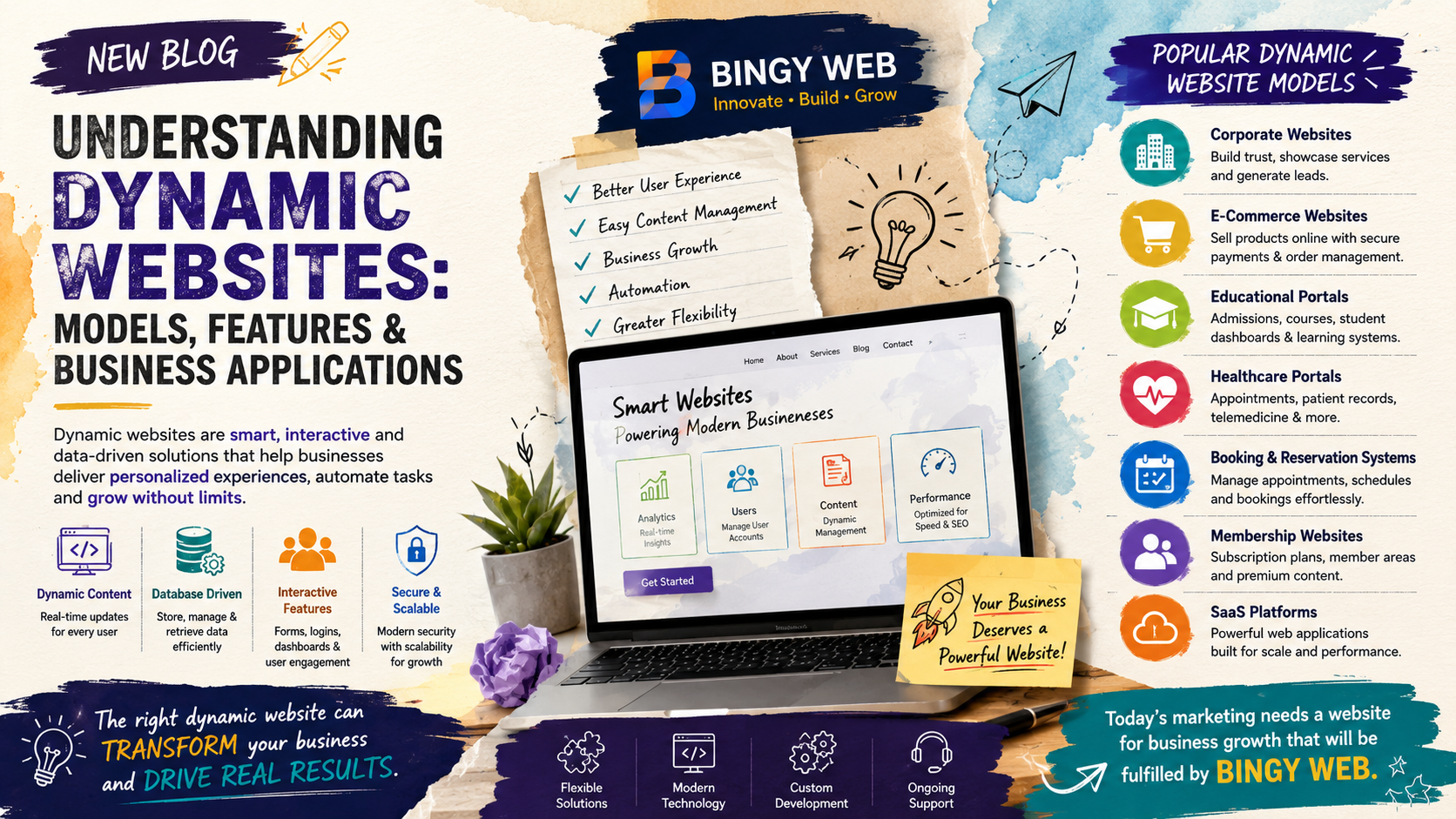
A dynamic website is a website that can display different content, interact with users, store information, process requests, and update content without requiring manual modifications to every page. These websites power everything from online stores and educational portals to healthcare systems, booking platforms, membership websites, and enterprise applications.
In today’s digital marketplace, businesses need websites that can adapt, grow, and support their operations efficiently. Understanding dynamic websites and their applications helps business owners make informed decisions when investing in their digital presence.
What Is a Dynamic Website?
A dynamic website is a website whose content can change based on user interactions, stored data, preferences, location, or other variables.
Unlike static websites, where every page is manually created and remains unchanged until edited by a developer, dynamic websites generate content automatically through databases and server-side technologies.
For example:
- An e-commerce website displays different products based on categories.
- A hospital portal shows personalized patient information.
- A university website provides student-specific academic details.
- A membership platform grants access to exclusive content after login.
Every user may experience different content depending on their interaction with the website.
This flexibility makes dynamic websites the preferred choice for most modern businesses.
Static Websites vs Dynamic Websites
Understanding the difference between static and dynamic websites is essential before choosing the right solution.
Static Websites
Static websites contain fixed content.
Characteristics include:
- Limited pages
- Simple design
- Faster development
- Lower maintenance
- Minimal functionality
Ideal for:
- Personal portfolios
- Small informational websites
- Basic company profiles
- Landing pages
Advantages
- Fast loading speeds
- Lower hosting costs
- Enhanced security
- Easy deployment
Limitations
- Difficult content updates
- No user interaction
- Limited scalability
- No database integration
Dynamic Websites
Dynamic websites generate content automatically through databases and applications.
Characteristics include:
- Interactive features
- User accounts
- Content management systems
- Automated updates
- Advanced integrations
Ideal for:
- Business websites
- E-commerce stores
- Educational portals
- Healthcare systems
- SaaS platforms
Advantages
- Highly scalable
- User-friendly management
- Personalized experiences
- Integration capabilities
- Enhanced functionality
Limitations
- Higher development complexity
- Increased maintenance requirements
- More advanced hosting needs
Despite these challenges, dynamic websites provide significantly greater business value.
Why Businesses Prefer Dynamic Websites
Businesses today need more than an online brochure.
They require platforms that can:
- Generate leads
- Manage customers
- Automate workflows
- Process transactions
- Deliver personalized experiences
Dynamic websites support these goals through powerful functionality and flexibility.
Key benefits include:
Easy Content Updates
Business owners can update content without technical expertise using content management systems.
Better User Experience
Dynamic content creates more engaging and relevant experiences.
Increased Efficiency
Automation reduces manual work and improves operational productivity.
Business Growth
Dynamic websites can scale as businesses expand.
Standard Dynamic Website Models
Modern businesses utilize various dynamic website models depending on their goals and requirements.
Let’s explore the most common models.
1. Corporate Business Websites
Corporate websites represent companies online and provide information about their products and services.
Common Features
- Homepage
- About Us
- Services
- Portfolio
- Blog
- Contact Forms
- Career Pages
Benefits
- Brand credibility
- Lead generation
- Customer engagement
- Marketing support
Suitable for:
- Service providers
- Agencies
- Consultants
- Manufacturers
2. Content Management System (CMS) Websites
CMS websites allow businesses to manage content through user-friendly dashboards.
Popular CMS platforms include:
- WordPress
- Drupal
- Joomla
Features
- Content publishing
- Blog management
- Media libraries
- User permissions
Benefits
- No coding required
- Easy updates
- Cost-effective management
Ideal for:
- Small businesses
- Bloggers
- News portals
- Educational organizations
3. E-Commerce Websites
E-commerce websites allow businesses to sell products online.
Features
- Product catalogs
- Shopping carts
- Secure payments
- Order management
- Customer accounts
Benefits
- Online sales
- Global reach
- Automated inventory tracking
- Customer analytics
Suitable for:
- Retail businesses
- Fashion brands
- Electronics stores
- Wholesale suppliers
4. Educational Portals
Educational institutions increasingly rely on dynamic platforms.
Features
- Student registration
- Online admissions
- Course management
- Attendance systems
- Learning resources
Benefits
- Improved communication
- Efficient administration
- Enhanced learning experiences
Suitable for:
- Schools
- Colleges
- Universities
- Training centers
5. Healthcare Portals
Healthcare providers use dynamic websites to improve patient services.
Features
- Appointment booking
- Doctor profiles
- Patient portals
- Medical records access
- Telemedicine integration
Benefits
- Better patient experience
- Reduced administrative workload
- Improved accessibility
Suitable for:
- Hospitals
- Clinics
- Diagnostic centers
6. Membership Websites
Membership websites restrict content based on user access levels.
Features
- User registration
- Subscription management
- Premium content
- Member dashboards
Benefits
- Recurring revenue
- Community building
- Customer retention
Ideal for:
- Online communities
- Professional organizations
- Learning platforms
7. Booking and Reservation Systems
Businesses offering appointments or reservations benefit from dynamic booking systems.
Features
- Calendar management
- Automated scheduling
- Payment integration
- Confirmation notifications
Benefits
- Time savings
- Improved customer convenience
- Reduced scheduling errors
Suitable for:
- Hotels
- Clinics
- Salons
- Event organizers
8. SaaS Platforms
Software as a Service (SaaS) applications are among the most advanced forms of dynamic websites.
Features
- User authentication
- Subscription billing
- Data management
- Analytics dashboards
- API integrations
Benefits
- Scalable business models
- Recurring income
- Global accessibility
Examples include:
- CRM systems
- Project management tools
- Accounting platforms
Essential Features of a Modern Dynamic Website
Regardless of industry, successful dynamic websites typically include:
Responsive Design
Websites must function seamlessly across:
- Desktops
- Tablets
- Smartphones
User Authentication
Secure login systems allow personalized experiences.
Database Integration
Databases store:
- User information
- Product data
- Content
- Transactions
Search Functionality
Fast search improves usability and customer satisfaction.
Security Features
Modern websites require:
- SSL certificates
- Data encryption
- Firewall protection
- Secure authentication
Analytics and Reporting
Businesses can monitor:
- Website traffic
- User behavior
- Conversion rates
- Sales performance
How Dynamic Websites Support Business Growth
Dynamic websites are more than technology solutions—they are business growth tools.
They help businesses:
Generate Leads
Capture inquiries through forms and automated workflows.
Increase Sales
Support online purchasing and customer engagement.
Improve Customer Service
Provide instant access to information and support.
Enhance Marketing Performance
Support SEO, advertising campaigns, and content marketing.
Streamline Operations
Automate repetitive business processes.
Scale Efficiently
Grow without constantly rebuilding systems.
As businesses evolve, dynamic websites adapt to changing requirements and market demands.
Choosing the Right Dynamic Website for Your Business
The ideal website depends on your business goals.
Consider factors such as:
- Industry requirements
- Budget
- Expected traffic
- Customer needs
- Future scalability
- Integration requirements
A startup may need a corporate website with lead-generation features, while an established company may require a complete customer portal or e-commerce ecosystem.
Professional planning ensures the chosen solution delivers maximum value and long-term success.
The Future of Dynamic Websites
Emerging technologies continue to shape website development.
Future trends include:
- Artificial Intelligence integration
- Personalized user experiences
- Voice search optimization
- Advanced automation
- Progressive Web Applications (PWAs)
- Enhanced cybersecurity
Businesses that embrace these innovations will be better positioned to compete in an increasingly digital economy.
Dynamic websites will continue to evolve as the foundation of modern business operations and customer engagement.
Conclusion: Turn Dynamic Ideas into Powerful Digital Solutions
As businesses continue to evolve, dynamic websites have become the foundation of efficient operations, customer engagement, and scalable growth. From content management systems and e-commerce platforms to educational portals and SaaS applications, dynamic websites empower organizations to deliver better experiences and achieve greater efficiency.
The right website is no longer just an online presence—it is a business tool that drives marketing, sales, customer service, and operational success. Investing in a dynamic website allows businesses to adapt to changing market demands while creating opportunities for long-term growth.
At Bingy Web, we specialize in designing and developing dynamic websites tailored to your unique business goals. Whether you need a corporate website, e-commerce platform, educational portal, healthcare system, booking application, or custom web solution, our team delivers scalable, secure, and future-ready digital experiences.
Today’s marketing and business growth depend on having a powerful website that works for your business. That foundation will be fulfilled by Bingy Web—helping you build, grow, and succeed in the digital world.