

Industry-Specific Websites: E-Commerce, Fashion, Entertainment, Manufacturing, Bloggers, and Personal Brands
Introduction: One Website Does Not Fit Every Industry
In today’s digital-first world, having a website is no longer enough. Businesses need websites that are specifically designed to meet the needs of their industry, customers, and operational requirements.
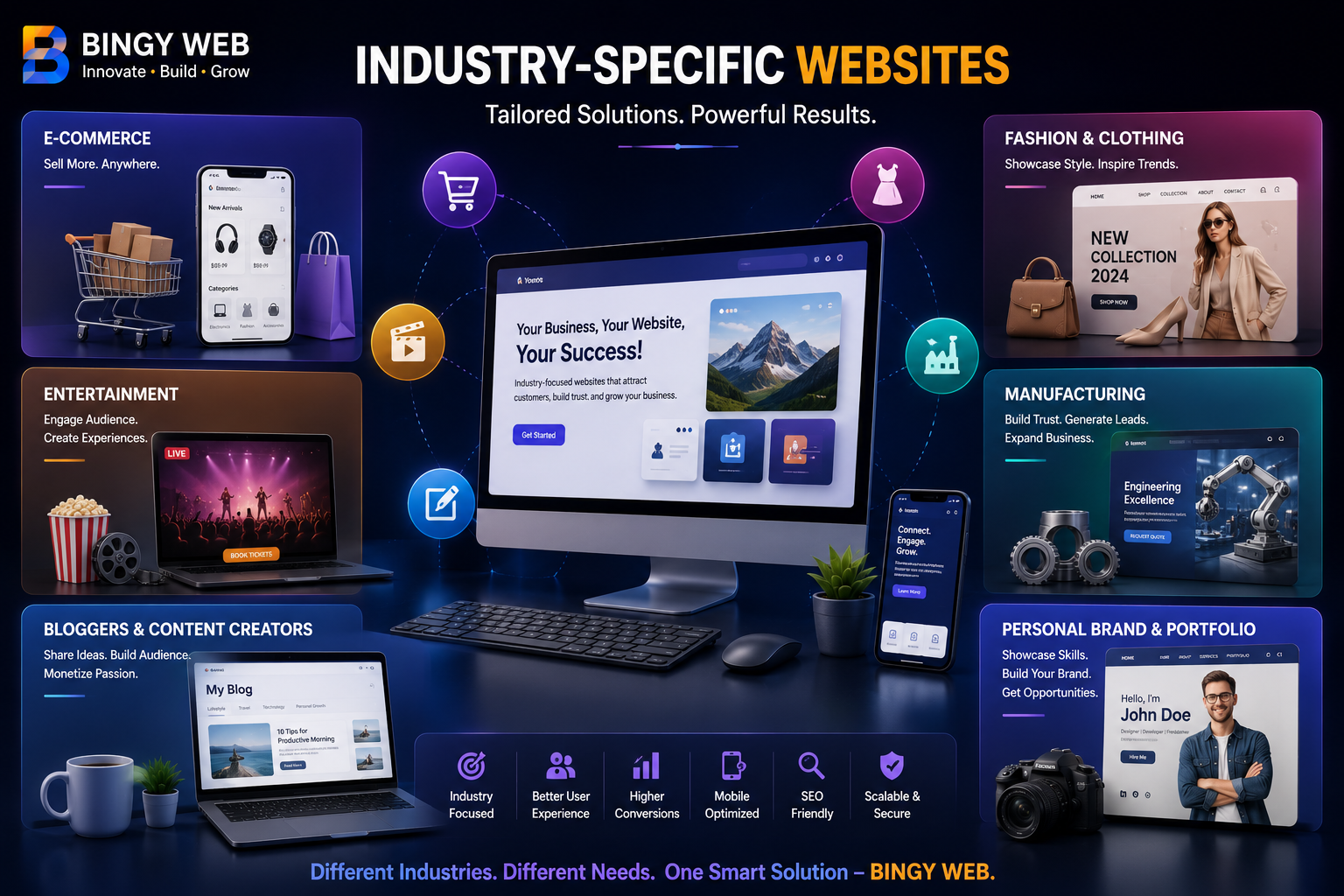
An e-commerce store requires product catalogs and payment gateways. A fashion brand needs visual storytelling and lookbooks. An entertainment company requires event management and media galleries. Manufacturers need product showcases and lead generation systems. Bloggers require content management tools, while personal brands need professional portfolios that build authority and trust.
Every industry has unique goals, and a website should be designed to support those goals effectively.
A professionally developed industry-specific website does more than provide information—it becomes a powerful business tool that attracts customers, generates leads, increases revenue, and strengthens brand recognition.
Let’s explore how different industries benefit from customized website solutions and why choosing the right website structure can significantly impact business growth.
Why Industry-Specific Websites Matter
Many businesses make the mistake of using generic website templates that fail to address their actual needs.
An effective website should:
- Reflect industry requirements
- Match customer expectations
- Simplify operations
- Support marketing efforts
- Improve conversions
Industry-focused websites provide better user experiences because they are built around how customers interact with a specific type of business.
The result is:
- Better engagement
- More inquiries
- Higher conversions
- Increased customer satisfaction
E-Commerce Websites: Building a 24/7 Online Store
E-commerce has transformed the way people shop.
Customers now expect the convenience of browsing products, comparing options, and completing purchases online.
A modern e-commerce website serves as a digital storefront that operates around the clock.
Essential Features of E-Commerce Websites
Product Catalog Management
Businesses can organize products into categories and provide detailed information.
Includes:
- Product descriptions
- Pricing
- Images
- Specifications
- Reviews
Shopping Cart System
Customers can add multiple products before completing their purchase.
This improves convenience and increases average order values.
Secure Payment Integration
Modern stores support:
- UPI Payments
- Credit Cards
- Debit Cards
- Net Banking
- Digital Wallets
Secure payment processing builds trust and improves customer confidence.
Order Tracking
Customers appreciate transparency.
Order tracking systems allow buyers to monitor shipping progress and delivery status.
Benefits of E-Commerce Websites
- Global reach
- Increased sales opportunities
- Lower operating costs
- Better customer convenience
- Automated inventory management
For modern retailers, an e-commerce website is one of the most valuable business assets.
Fashion and Clothing Brand Websites
Fashion is a highly visual industry.
Customers want to see products from multiple angles, explore collections, and understand how items fit into their lifestyle.
A standard business website is often insufficient for fashion brands.
Key Features for Fashion Websites
Product Galleries
High-quality visuals help customers make purchasing decisions.
Professional photography enhances product appeal and brand perception.
Lookbooks
Lookbooks allow brands to showcase complete collections and styling inspiration.
This encourages additional purchases and strengthens brand identity.
Size Guides
Clear sizing information reduces uncertainty and lowers return rates.
Wishlist Functionality
Customers can save products for future purchases.
This improves engagement and supports remarketing efforts.
Customer Reviews
Reviews provide social proof and increase buyer confidence.
Benefits for Fashion Brands
- Stronger branding
- Higher customer engagement
- Improved sales performance
- Better customer experience
Fashion websites are not just stores—they are digital brand experiences.
Entertainment Industry Websites
The entertainment industry thrives on engagement, excitement, and audience interaction.
Whether it’s an event organizer, production company, artist, influencer, gaming platform, or media brand, websites play a crucial role in audience development.
Essential Features
Event Management
Users can:
- View schedules
- Register for events
- Purchase tickets
- Receive updates
Media Galleries
Entertainment businesses need:
- Photo galleries
- Video showcases
- Performance highlights
- Promotional content
Ticket Booking Systems
Online ticket sales simplify event management while improving customer convenience.
Social Media Integration
Connecting audiences across platforms strengthens community engagement.
Benefits
- Increased audience reach
- Better event management
- Higher engagement levels
- Improved revenue opportunities
An entertainment website becomes the central hub for fan interaction and brand growth.
Manufacturing and Industrial Company Websites
Many manufacturing businesses underestimate the importance of digital presence.
However, buyers, distributors, and business partners increasingly research suppliers online before initiating contact.
A professional industrial website helps establish credibility and generate business opportunities.
Key Features
Product Catalogs
Manufacturers can display:
- Product specifications
- Technical documents
- Images
- Certifications
Dealer and Distributor Information
Businesses can help partners locate authorized dealers and distribution networks.
Inquiry Forms
Lead generation forms allow potential clients to request quotes and additional information.
Corporate Information
Showcasing company history, facilities, certifications, and achievements builds trust.
Benefits
- Increased lead generation
- Improved brand credibility
- Better customer communication
- Enhanced global visibility
For industrial companies, websites are powerful sales and business development tools.
Websites for Bloggers and Content Creators
Content creation has become a major industry.
Bloggers, writers, educators, and creators rely on websites to publish content, build audiences, and generate revenue.
Unlike social media platforms, a personal website gives creators complete control over their content and audience.
Essential Features
Content Management System
Allows creators to publish articles quickly and efficiently.
Category Organization
Readers can easily find content relevant to their interests.
Search Functionality
Improves content discoverability.
Newsletter Integration
Helps creators build direct relationships with their audience.
Advertising and Monetization
Bloggers can generate income through:
- Ads
- Sponsorships
- Affiliate marketing
- Membership programs
Benefits
- Audience ownership
- Improved SEO visibility
- Long-term content value
- Revenue generation opportunities
A blogging website serves as both a publishing platform and a business asset.
Personal Brand and Portfolio Websites
Professionals increasingly use personal websites to establish authority and showcase expertise.
Whether you’re a consultant, coach, freelancer, speaker, artist, or entrepreneur, a personal brand website helps differentiate you from competitors.
Key Features
Professional Portfolio
Showcase projects, achievements, and expertise.
Personal Story
Build trust through authentic storytelling.
Service Pages
Clearly communicate offerings and value propositions.
Testimonials
Customer feedback strengthens credibility.
Contact Forms
Make it easy for potential clients to connect.
Benefits
- Enhanced professional image
- Increased visibility
- Better lead generation
- Stronger personal branding
A personal website often becomes the foundation of a successful professional presence.
The Importance of Mobile-Friendly Design
Regardless of industry, mobile optimization is essential.
Most users access websites through smartphones.
A mobile-friendly website provides:
- Faster loading speeds
- Better usability
- Improved SEO rankings
- Higher conversion rates
Businesses that ignore mobile users risk losing valuable opportunities.
SEO: Helping Industry Websites Get Found
Even the best website has limited value if customers cannot find it.
Search Engine Optimization (SEO) helps websites appear in search results when potential customers are actively looking for products or services.
Benefits include:
- Increased traffic
- Higher visibility
- Better lead generation
- Long-term marketing value
Industry-specific SEO strategies ensure businesses reach the right audience.
Integrating Digital Marketing with Industry Websites
Modern websites work best when combined with digital marketing strategies.
This includes:
- Search Engine Optimization
- Social Media Marketing
- Email Campaigns
- Content Marketing
- Paid Advertising
A website serves as the destination where marketing efforts convert visitors into customers.
Without a strong website, marketing campaigns often fail to reach their full potential.
Future Trends in Industry Websites
Businesses continue adopting advanced technologies.
Emerging trends include:
Artificial Intelligence
- Chatbots
- Personalized recommendations
- Automated support
Advanced Analytics
- Customer behavior tracking
- Conversion optimization
Progressive Web Applications
- App-like experiences without downloads
Personalization
- Customized user experiences
- Targeted content delivery
Businesses that embrace these innovations gain competitive advantages.
Choosing the Right Website for Your Industry
Every business has unique requirements.
Before developing a website, consider:
- Industry needs
- Customer expectations
- Growth plans
- Budget
- Operational requirements
A tailored solution often delivers significantly better results than a generic website.
Investing in the right website today can create long-term benefits for years to come.
Conclusion: Industry-Focused Websites That Drive Results
Every industry has unique challenges, customer expectations, and operational requirements. Whether you’re running an e-commerce store, fashion brand, entertainment company, manufacturing business, content platform, blog, or personal brand, a professionally developed website can become one of your most valuable business assets.
A website is more than an online presence—it is your digital storefront, marketing platform, lead-generation engine, customer communication center, and growth foundation. The right website helps businesses showcase their strengths, build credibility, attract customers, and achieve measurable results.
At Bingy Web, we create industry-specific website solutions tailored to your business goals. From e-commerce platforms and fashion websites to industrial portals, entertainment platforms, blogs, and personal brand websites, we develop digital experiences that help businesses grow and succeed.
Today’s marketing and business growth require a professional website that reflects your industry and serves your customers effectively. That foundation will be fulfilled by Bingy Web—delivering tailored digital solutions that help businesses build stronger brands, generate more opportunities, and achieve long-term success in the digital world.